Equine gastric ulcers are one of the most common causes of poor performance in horses in the UAE. Effective treatment relies on consistent acid suppression, with omeprazole remaining the gold standard.
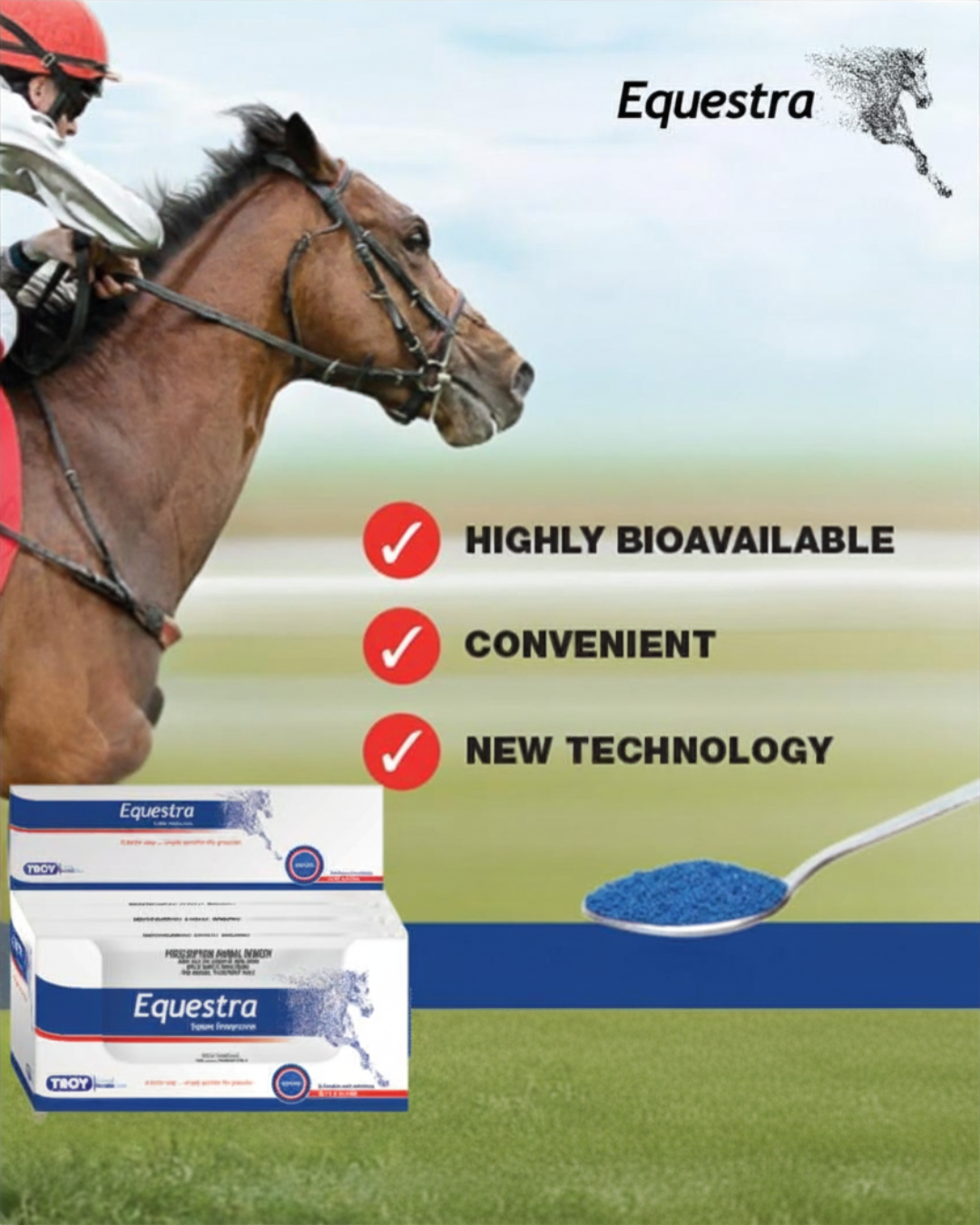
Equine gastric ulcers are one of the most common causes of poor performance in horses. In the UAE, treatment typically involves omeprazole therapy to reduce stomach acid and support healing. Early and consistent treatment is essential to prevent recurrence.
Equestra® Equine Omeprazole: Managing Equine Gastric Ulcers
Equine Gastric Ulcer Syndrome (EGUS) remains one of the most prevalent conditions affecting performance horses, particularly those in intensive training and management systems. Clinical signs such as reduced appetite, poor performance, behavioural changes, and intermittent colic are commonly reported.
Effective management of EGUS relies on consistent acid suppression, appropriate dosing, and practical administration strategies that ensure compliance.
Equestra® Equine Omeprazole introduces a novel in-feed granule formulation, designed to address both pharmacological and practical limitations associated with traditional oral paste therapies.
Understanding Gastric Ulcers in Horses
EGUS encompasses two primary disease types:
- Equine Squamous Gastric Disease (ESGD) – primarily driven by acid exposure
- Equine Glandular Gastric Disease (EGGD) – associated with impaired mucosal defence and stress-related factors
In performance horses, periods without feed combined with exercise can increase acid exposure in the stomach, leading to mucosal damage.
Did you know up to 90% of racehorses may be affected by gastric ulcers? Click on image below learn why.
.png)
Learn more about
Mechanism of Action: Why Omeprazole Matters
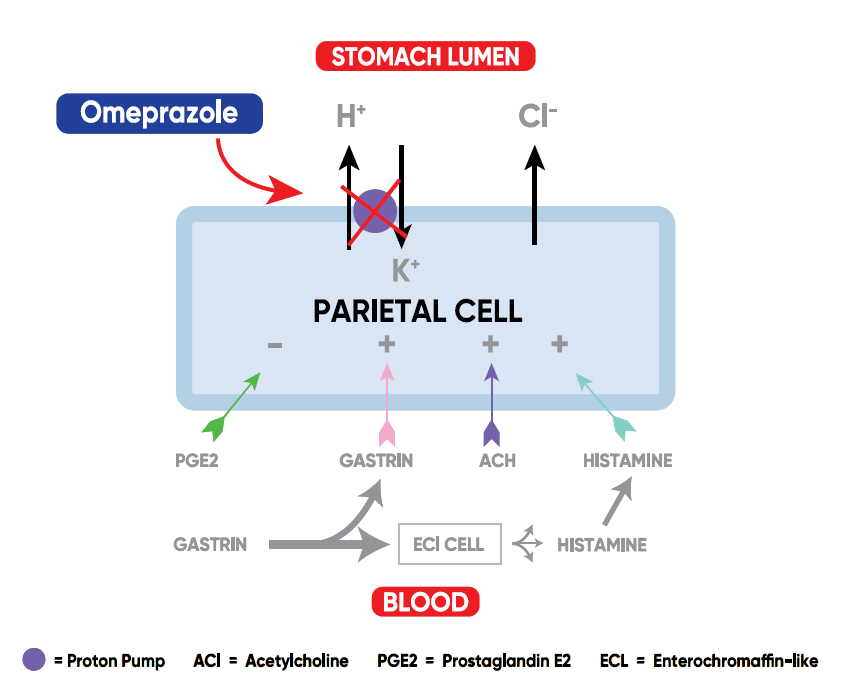
Omeprazole is a proton pump inhibitor (PPI) that works by:
- Binding to the H+/K+ ATPase enzyme in gastric parietal cells
- Inhibiting hydrochloric acid secretion
- Increasing gastric pH, allowing ulcer healing
This reduction in acidity enables the stomach lining to repair, with clinical improvement often observed within two weeks of treatment initiation.
What Makes Equestra® Different?
1. Enteric-Coated Granule Technology
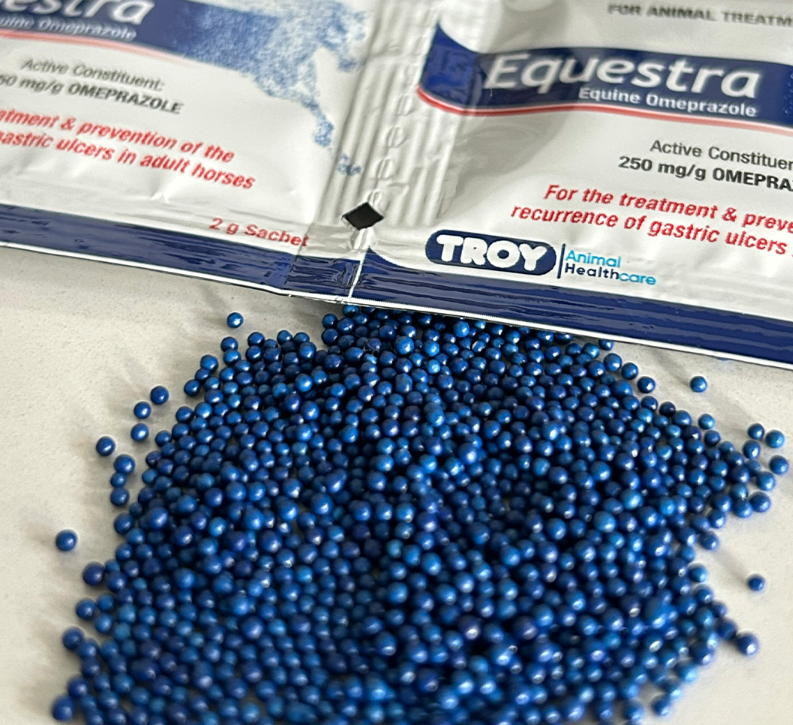
Equestra is formulated as enteric-coated granules, designed to:
- Protect omeprazole from degradation in the acidic stomach environment
- Ensure delivery to the small intestine, where absorption occurs
This is critical, as omeprazole must be absorbed systemically before exerting its effect.
2. Improved Bioavailability
Clinical data demonstrates:
- ~55% bioavailability for Equestra granules
- Compared to ~15–17% for oral paste formulations
This results in:
- Greater systemic exposure to the active ingredient
- Potential for more consistent therapeutic effect
In a 500 kg horse, this translates to:
- ~550 mg absorbed with Equestra
- Compared to significantly lower absorption with some paste formulations
3. Proven Pharmacokinetics and Clinical Performance
Published pharmacokinetic and pharmacodynamic studies show:
- Comparable or improved plasma concentrations versus oral pastes
- Effective gastric pH control
- Bioequivalence across key pharmacodynamic parameters
Additionally:
- Equestra demonstrates rapid absorption, reducing feeding wait time from 60 minutes to 30 minutes
4. In-Feed Administration: Practical Advantages
Equestra is administered by:
- Sprinkling granules onto a small amount of feed
This offers clear advantages:
- Eliminates need to restrain horses for dosing
- Reduces stress for both horse and handler
- Improves dosing compliance
Studies indicate that the formulation is readily consumed by horses, supporting its use as an alternative to paste formulations.
Clinical Use and Dosing
- Treatment dose: 2 mg/kg once daily for 2 weeks
- Maintenance dose: 1 mg/kg once daily to prevent recurrence
Consistent daily administration is essential, as:
- Ulcers can recur within two weeks if treatment is discontinued
Safety Profile - Equestra is:
- Classified as not hazardous under standard criteria
- Not considered a dangerous good for transport
- Generally well tolerated when used as directed
Standard handling precautions (e.g., avoiding contact with eyes/skin) are recommended.
Practical Considerations for Veterinary Use
For veterinarians, Equestra offers:
- A compliance-friendly alternative to oral paste
- Improved pharmacokinetic performance
- Flexible use for performance horses in the UAE that remain in training
For horse owners, this translates to:
- Easier daily administration
- Reduced stress during treatment
- Greater confidence that the full dose is consumed
Effective management of equine gastric ulcers requires both pharmacological efficacy and practical administration.
Equestra® Equine Omeprazole combines:
- Enteric-coated delivery
- Increased bioavailability
- In-feed convenience
This positions it as a modern alternative to traditional omeprazole pastes, supporting both clinical outcomes and day-to-day usability in the field.
Frequently Asked Questions About Equine Gastric Ulcers
What is the best treatment for equine gastric ulcers in the UAE?
Omeprazole is the most widely used and recognised treatment for equine gastric ulcers.
It works by suppressing gastric acid production, increasing stomach pH, and creating conditions that allow ulcers to heal. Consistent daily dosing is essential to achieve effective acid suppression and support healing.
How does omeprazole work in horses?
Omeprazole reduces stomach acid by blocking the proton pump in gastric cells.
It inhibits the H+/K+ ATPase enzyme in gastric parietal cells, decreasing hydrochloric acid secretion and raising gastric pH. This allows the stomach lining to repair and supports ulcer healing.
What is Equestra® and how is it different from oral paste omeprazole?
Equestra® is an in-feed omeprazole formulation designed for ease of administration and consistent dosing.
It is presented as enteric-coated granules and differs from oral pastes by:
- Being administered by sprinkling onto feed
- Eliminating the need to restrain horses for dosing
- Protecting the active ingredient through the stomach via enteric coating
These features support improved practicality and compliance in everyday use. Explore Equestra® Equine Omeprazole here
Is Equestra® more bioavailable than paste formulations?
Equestra® granules demonstrate higher bioavailability compared to some oral paste formulations.
Clinical data indicates approximately 55% bioavailability for Equestra, compared to around 15–17% for certain paste formulations. Higher bioavailability means a greater proportion of the active ingredient is absorbed systemically.
How is Equestra® administered to horses?
Equestra® is administered by sprinkling granules onto a small amount of feed before the main meal.
This approach helps ensure the full dose is consumed and avoids the need for oral syringe administration, making treatment more practical in the field.
How long does it take for equine gastric ulcers to heal?
Clinical improvement is often seen within approximately two weeks of treatment.
With effective acid suppression using omeprazole, gastric acidity is reduced to a non-irritating level, allowing the stomach lining to heal and clinical signs to improve.
Can gastric ulcers return after treatment?
Yes, gastric ulcers can recur if treatment is stopped without maintenance management.
Evidence indicates that ulcers may return within two weeks after discontinuing treatment. Ongoing management, including maintenance dosing and appropriate feeding practices, is important to reduce recurrence.
Why are gastric ulcers common in performance horses?
Performance horses are at increased risk due to management and training factors.
Key contributing factors include:
- Periods without feed
- Intensive exercise
- Increased exposure of the stomach lining to gastric acid
These conditions increase the likelihood of mucosal damage and ulcer formation.
What are the common signs of gastric ulcers in horses?
Common clinical signs include:
- Reduced appetite
- Poor performance
- Behavioural changes
- Intermittent colic
Does feeding affect omeprazole absorption?
Yes, feeding practices can influence omeprazole absorption.
Equestra®’s enteric-coated granules are designed to pass through the stomach and be absorbed in the small intestine, helping to optimise systemic uptake when administered correctly.
Learn more about Equestra Equine Omeprazole available in the UAE or Speak to our team based in Dubai at sales@thevet.group
Loading...